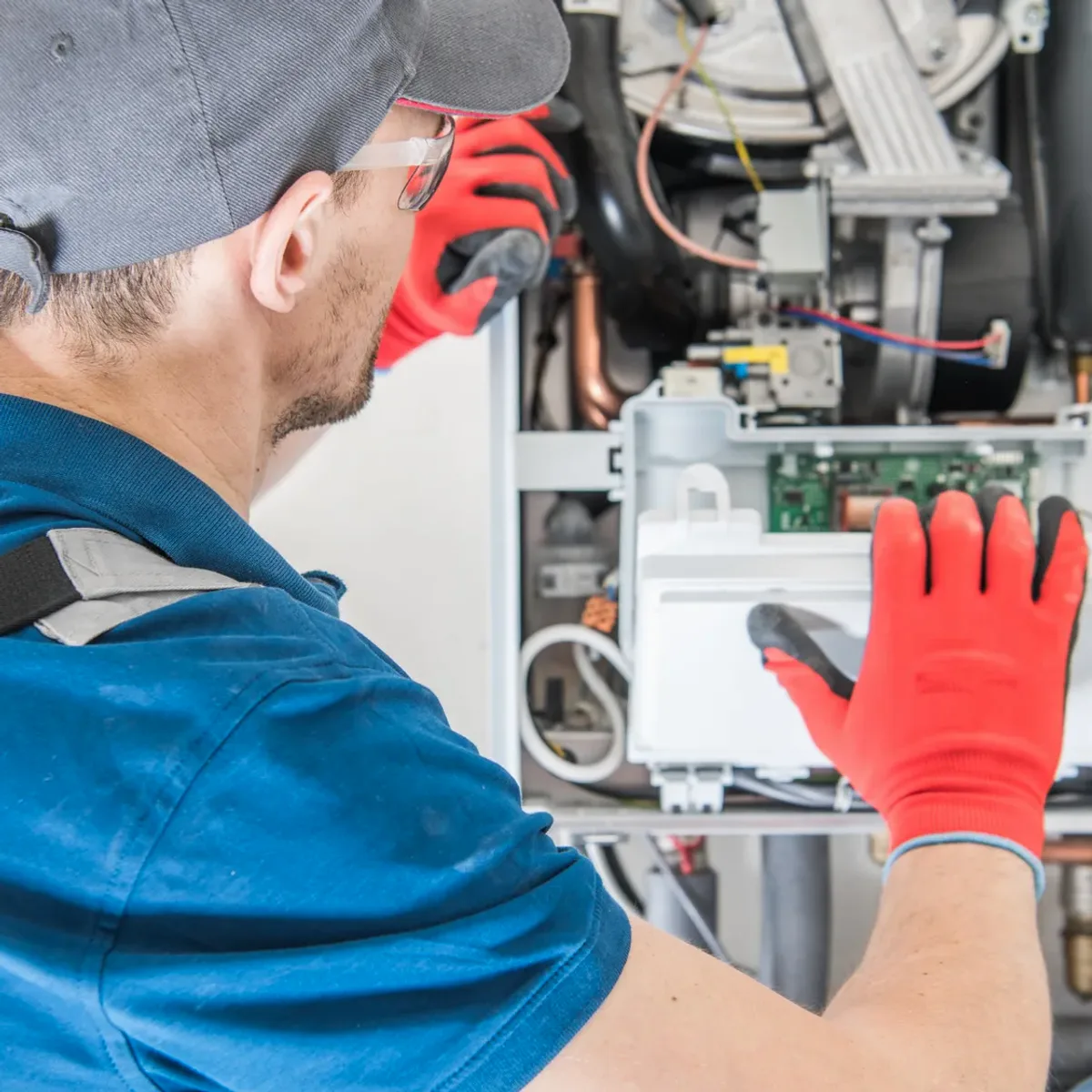
Request boiler service for a property in St. Thomas. Include the equipment, the problem or planned work, and your location so the request can be reviewed.
Does the boiler fail to fire, show a pressure change, leak, or leave radiators or in-floor loops cold?
Boiler work depends on the fuel, boiler design, and hydronic distribution system. A natural-draft cast-iron boiler serving radiators differs from a condensing boiler connected to in-floor loops, so diagnosis or replacement planning must reflect the equipment actually installed. Requests may concern no heat, ignition failure, pressure symptoms, leaks, maintenance, or replacement. Model details, fuel type, distribution layout, and service history help define the appropriate scope.
Assessment identifies whether the boiler is natural-draft or condensing, its fuel, and whether heat is distributed through radiators or in-floor loops. Ignition failure, circulator problems, pressure symptoms, and leaks point to different investigations. The boiler model and service records also matter when considering replacement. Pressure controls, fuel systems, combustion, and internal electrical work require professional inspection, not occupant adjustment.
Gas, propane, and oil boiler repair and service
Natural-draft cast-iron radiator systems and condensing in-floor systems
Ignition, circulator, pressure, maintenance, and replacement decisions
Assessment and Scope
Questions for the Proposed Work
01
Separate ignition faults from circulation problems
A boiler that will not fire calls for investigation of its fuel, ignition sequence, and controls; a boiler that fires while radiators or in-floor loops remain cold may involve circulation or distribution. Leaks and pressure changes require their own assessment because they do not identify a failed component by themselves. Describe which parts of the system are affected and when symptoms began. Do not adjust pressure controls or repeatedly reset the boiler.
02
Match replacement planning to boiler and emitters
Replacement assessment should account for the existing boiler type, fuel, and hydronic layout. A natural-draft cast-iron boiler serving radiators presents different connection and operating considerations from a condensing boiler serving in-floor loops. The distribution system, controls, and venting arrangements help define suitable replacement scope. A high-efficiency model should not be assumed to fit without assessing system compatibility and the required installation changes.
03
Base maintenance on inspection and instructions
Maintenance can include examination of burners, controls, venting, and applicable safety components, with checks guided by the boiler design and manufacturer instructions. A system flush is not automatic; whether it is appropriate depends on inspection findings and the hydronic circuit. Radiator systems and in-floor loops may have different service considerations. Maintenance findings can identify a repair need, but they do not alone mean the boiler requires replacement.
Compare the next step
Show the route to the boiler and the location of pumps, valves, and other service points. Ask which clearances and access must remain under the equipment instructions before adding storage or enclosing the mechanical space. The proposal should explain how routine maintenance and future repairs can be performed in the finished layout.
Leave fuel, combustion, electrical, and pressure-system work to a qualified contractor. Do not adjust safety devices or repeatedly add water to a system with an unexplained leak or pressure loss.