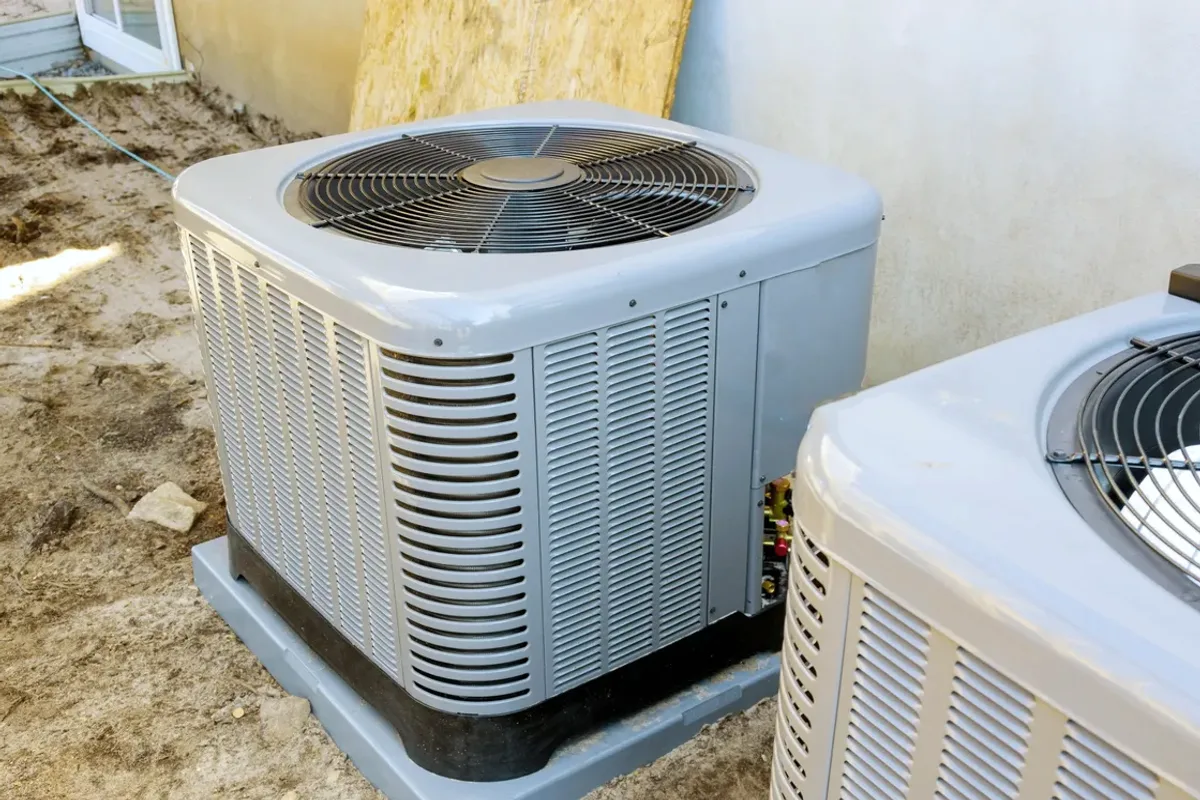
Is the system running without cooling, not starting, or showing weak airflow or a frozen coil?
An air conditioner that will not start, blows warm air, has weak airflow, or develops a noise may have an electrical, airflow, coil, condensate, refrigerant, or control problem. The equipment type matters: central air uses ductwork, while a ductless unit has indoor and outdoor sections, and a heat pump can also provide heating. Describe the symptoms and system type in a service request so inspection can focus on the cooling equipment involved.
Assessment identifies whether the request concerns central air, a ductless mini-split, or a heat pump in cooling mode. The timing of the fault, airflow at registers or indoor units, visible ice, and any displayed error information help narrow the cause. Electrical components and refrigerant circuits require professional inspection; symptoms alone do not confirm which part has failed.
Central air, ductless mini-split, and heat-pump cooling repair
Electrical, airflow, coil, condensate, and refrigerant symptoms
System-specific diagnosis and repair-versus-replacement comparisons
Assessment and Scope
Questions for the Proposed Work
01
Distinguish electrical failure from cooling-circuit symptoms
A unit that will not start may require investigation of its controls or electrical components, while warm supply air from a running system calls for a broader cooling diagnosis. Frozen coils and weak airflow can have more than one cause, so simply restarting equipment may not resolve the fault. Record when the problem occurs, whether the outdoor section runs, and any unusual sound or error indication.
02
Match inspection to the system type
For central air, inspection can consider airflow through the duct system, indoor and outdoor coils, thermostat signals, and condensate drainage. A ductless system instead needs attention to its indoor unit, outdoor section, controls, and the affected zone. A heat pump in cooling mode has its own operating components and must be assessed as a heat pump. Refrigerant measurements or electrical testing are service tasks, not homeowner checks.
03
Choose repair or replacement from evidence
A confirmed, limited fault may support repair, while repeated problems, a major component failure, or deteriorated equipment can make replacement worth comparing. Useful information includes the model and age, prior repair records, the nature of the current fault, and the condition of coils and other components. Age by itself does not establish that replacement is preferable; the specific diagnosis and equipment configuration matter.
Compare the next step
Explain how the contractor reaches the indoor coil, drain, and outdoor unit and whether equipment removal would affect finishes. Ask what access changes are necessary for the proposed work and how those changes are restored. Retain a maintainable route when landscaping or mechanical-room work is completed.
Do not open electrical panels or handle refrigerant. If ice, water near electrical equipment, or abnormal operation is present, stop using the affected system and request an assessment.